Trusted company that deals in quality-made products

 08045812644
 Mon-Sat 9.00 AM - 6.00 PM
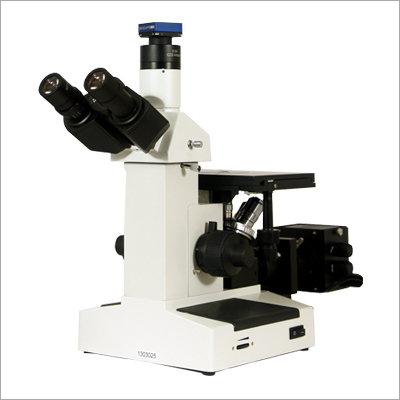
Trinocular Metallurgical Inverted Microscope
80000.00 - 225000.00 INR/Number
Product Details:
- Product Type Trinocular Metallurgical Inverted Microscope
- Usage laboratory
- Voltage 200-240 Volt (v)
- Color White
- Theory Metallurgical Microscope
- Drawtube Trinocular
- Sensor Optical
- Click to view more
X
Trinocular Metallurgical Inverted Microscope Price And Quantity
- 80000.00 - 225000.00 INR/Number
- 1 Number
Trinocular Metallurgical Inverted Microscope Product Specifications
- White
- 200-240 Volt (v)
- Halogen or LED
- Trinocular
- laboratory
- 100 - 1000 X
- Trinocular
- Halogen or LED
- Trinocular Metallurgical Inverted Microscope
- Metallurgical Microscope
- 10X Wide field pair
- Optical
Trinocular Metallurgical Inverted Microscope Trade Information
- Pune
- 10 Number Per Month
- 1 Week
- All India
Product Description
Trinocular Metallurgical Inverted Microscope
Metallurgical inverted microscope for QA/QC laboratory and tool room applications having magnification range 100X to 1000X (dry). Wide magnification range with high resolution optics makes it perfect tool for various industrial, educational and research applications.
Specification
| Magnification Range | 100 - 1000 X |
| Is It Portable | Non Portable |
| Application | Metallography |
| Illumination | Halogen or LED |
| Voltage | 200 - 240 V |
| Eyepiece | 10X,15X,20X |
| Light Source | Halogen or LED |
| Model Number/Name | SuXma - Series |
| Brand | Conation |
| Magnification | 1000X |
Precision Metallurgical Imaging
The inverted design provides excellent accessibility for large samples, making it ideal for inspecting metallurgical structures. Its advanced optics deliver crisp and clear images, ensuring accurate analysis in research or quality control environments.
Flexible Illumination Options
The microscope features both halogen and LED light sources, allowing users to choose the most suitable illumination for their specific sample types. This flexibility enhances contrast and clarity, vital for precise metallurgical observations.
Seamless Documentation Capability
The trinocular head is equipped with a sensor port for connecting cameras, making it easy to capture, store, or share images. This feature supports teaching, research, and reporting in various laboratory settings.
FAQ's of Trinocular Metallurgical Inverted Microscope:
Q: How is the Trinocular Metallurgical Inverted Microscope used in laboratories?
A: This microscope is employed to examine and analyze the microstructure of metals, alloys, and other industrial materials. Its inverted design allows for convenient inspection of larger and heavier samples typically used in metallurgical research and quality assurance.Q: What are the key benefits of choosing this microscope with halogen or LED illumination?
A: Halogen and LED light sources provide excellent brightness and flexibility, enhancing visibility and image contrast during specimen examination. LED offers longevity and low heat emission, while halogen delivers a broader spectrum suitable for certain analysis techniques.Q: When is it essential to use a trinocular head in metallurgical microscopy?
A: A trinocular head is especially important when users need to connect a camera or sensor for image capture, documentation, or digital sharing, which is common in research, education, and reporting applications.Q: Where can this microscope be acquired in India?
A: It is available through leading manufacturers and suppliers across India, particularly specialized distributors in laboratory and industrial equipment.Q: What process should be followed to prepare metal samples for viewing under this microscope?
A: Samples are typically cut, polished, and sometimes etched to reveal their internal structures before being placed on the microscope stage. This preparation ensures that microstructural details are visible during examination.Q: How does magnification range benefit metallurgical analysis?
A: The variable magnification range from 100X to 1000X allows users to observe fine details and general features, providing comprehensive insights into material properties, grain structures, and defects.Tell us about your requirement

Price:
Quantity
Select Unit
- 50
- 100
- 200
- 250
- 500
- 1000+
Additional detail
Mobile number
Email

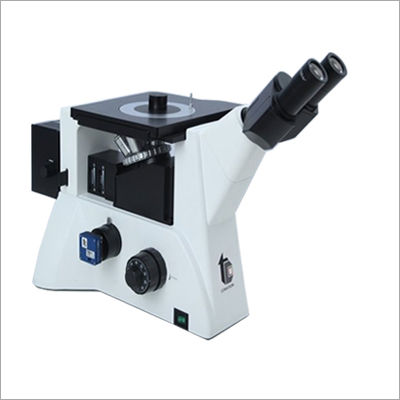
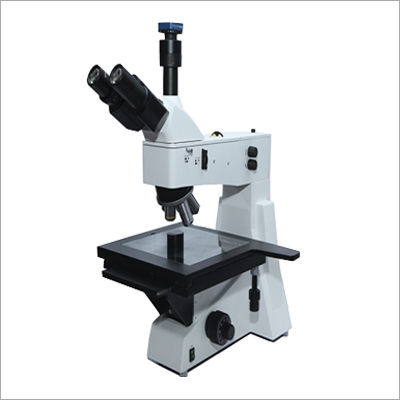
Other Products in 'Metallurgical Microscopes' category



Our Products
Quick Links

- Flat NO. 3, DINKAR SMRITI OFF. J. M. ROAD, CTS 1295 SHIVAJI NAGAR,Pune - 411005, Maharashtra, India
- Phone : 08045812644
GST : 27AAJCC6007F1ZU

- Mr Prashant P (Head-Applications)
- Mobile : 08045812644
-
 Send Inquiry
 Send Inquiry
 Send Inquiry
 Send SMS

CONATION TECHNOLOGIES PRIVATE LIMITED
All Rights Reserved.(Terms of Use)
Developed and Managed by Infocom Network Private Limited.
Developed and Managed by Infocom Network Private Limited.


