Trusted company that deals in quality-made products

 08045812644
 Mon-Sat 9.00 AM - 6.00 PM
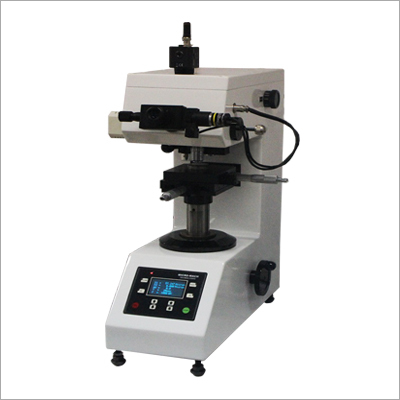
Digital Microhardness Tester
350000 INR/Number
Product Details:
- Specimen Size Maximum height 70 mm, max. width 100 mm
- Power Supply Electric
- Max Height 70 mm (specimen)
- Interface Type USB, RS232
- Voltage 220 Volt (v)
- Mounting Type Bench Top
- Resolution 0.1 HV
- Click to view more
X
Digital Microhardness Tester Price And Quantity
- 350000 INR/Number
- 1 Number
Digital Microhardness Tester Product Specifications
- Up to 100 mm
- Maximum height 70 mm, max. width 100 mm
- 70 mm (specimen)
- Electric
- USB, RS232
- 220 Volt (v)
- Bench Top
- 0.1 HV
- Digital Microhardness Tester
- 200 tests/hour
- 50 Hz
- 35 kg
- <2 seconds
- Digital (LCD/LED)
- 85% RH
- Variable, adjustable (typ. 0.05 2 mm/min)
- Semi-automatic / Automatic
- 1 2000 HV
- Standard port, 15 mm
- Up to 20 mm
- Digital readout, automatic turret, data output, white color, sturdy framework
- 1.5%
- Digital Microhardness Tester
- Digital/Automatic
- Microhardness (Vickers, Knoop)
- White
- Laboratory
- 10 2000 HV
- Multiple (up to 5, manual loading)
- 220 V AC
- Metallography, Laboratory, Research
- 10C 35C
- 100x, 400x (objective lenses)
- Touch Panel / Button Control
- USB/RS232 export
- Complies with ISO 6507, ASTM E384
- LED, long-life
- Vickers / Knoop
- Coarse and Fine Adjustment
Digital Microhardness Tester Trade Information
- Pune
- 3 Number Per Month
- 4 Week
- All India
Product Description
Digital Microhardness Tester
Digital Microhardness Tester utilizes an adjustable electromagnetic loading system to provide the best testing results. It is available with easy-to-read dual-line digital filar eyepiece to ensure accurate indentation measurements. This is available with a modern video camera unit to ensure easier observation of the indentations. With high-end touch screen LCD panel, this Digital Microhardness Tester displays the hardness value and test position data. In addition, this is available with the data processing functions such as statistical calculations.
- Load Range - 10 gm to 1 kg
- Motorized Loading
- Load selection though dial knob
- Digital display of diagonals and hardness value
Specification
|
Material |
Mild Steel |
|
Net Weight |
90 Kg |
|
Voltage |
220 - 380 V |
|
Brand |
Conation |
|
Automation Grade |
Manual |
|
Load Capacity |
1 Kg,2 Kg,5 Kg |
|
Test Force |
10 gf - 1000 gf |
|
Warranty |
1 Year |
|
Hardness Scale |
HV,HK |
Precise Microhardness Testing
This tester ensures highly accurate and repeatable measurements thanks to its advanced focusing system, digital automation, and robust design. The combination of Vickers and Knoop indenters allows for a broad hardness range, making it suitable for various metallography, research, and laboratory applications. Support for up to five specimens enables efficient batch testing.
Advanced Digital Control & Data Management
Users benefit from an intuitive touch panel and button controls, paired with a clear digital LCD/LED display. The tester offers quick response times and built-in data management, with straightforward USB and RS232 export options for seamless integration into laboratory workflows. These features promote improved productivity and reliable data storage.
Durable Design & Strict Standard Compliance
Engineered to withstand the rigors of daily laboratory use, the tester boasts a sturdy framework, long-life LED illumination, and stable bench-top mounting. Meeting ISO 6507 and ASTM E384 standards, it guarantees compliance for academic, commercial, and research environments while ensuring consistent performance at 220V AC, 50 Hz.
FAQ's of Digital Microhardness Tester:
Q: How do you operate the Digital Microhardness Tester?
A: The tester is operated using either the touch panel or physical button controls, offering both automatic and semi-automatic modes. This user-friendly interface allows for easy specimen loading, test parameter selection, and quick adjustment of test settings such as load, speed, and measurement type.Q: What applications is this microhardness tester suited for?
A: It is ideal for metallography, research, and general laboratory use. The tester complies with international ISO 6507 and ASTM E384 standards, making it suitable for precise Vickers and Knoop microhardness evaluations on a wide variety of metals, alloys, and materials.Q: When should I use the variable test speed functionality?
A: Variable test speed (0.05-2 mm/min) is useful when testing samples of different hardness or thickness. Adjusting the speed can help optimize indentation quality and prevent damage to sensitive specimens, ensuring more reliable and accurate test results.Q: Where can the test results be exported?
A: Test data can be exported directly from the machine using USB or RS232 ports. This flexibility enables easy transfer and integration with laboratory information management systems or data analysis software, supporting efficient recordkeeping.Q: What is the process for conducting a hardness test with this equipment?
A: Begin by loading up to five specimens manually and selecting the appropriate indenter (Vickers or Knoop) and objective lens (100x or 400x). Adjust the focusing system, set your test parameters on the digital panel, and initiate the automated measurement. Results are displayed within two seconds and can be exported via USB or RS232.Q: How does this tester benefit laboratory operations?
A: With features such as digital automation, fast response time, reliable data export, and batch testing capacity, the tester streamlines laboratory workflows. It increases testing throughput (up to 200 tests per hour) while ensuring precise, consistent microhardness measurements.Q: What is the maintenance requirement for the LED light source?
A: The LED light source is designed for longevity and consistency, requiring minimal maintenance. Regular inspections for dust or contamination around the optical path, and occasional cleaning, will help maintain optimal illumination and measurement accuracy.Tell us about your requirement

Price:
Quantity
Select Unit
- 50
- 100
- 200
- 250
- 500
- 1000+
Additional detail
Mobile number
Email



Our Products
Quick Links

- Flat NO. 3, DINKAR SMRITI OFF. J. M. ROAD, CTS 1295 SHIVAJI NAGAR,Pune - 411005, Maharashtra, India
- Phone : 08045812644
GST : 27AAJCC6007F1ZU

- Mr Prashant P (Head-Applications)
- Mobile : 08045812644
-
 Send Inquiry
 Send Inquiry
 Send Inquiry
 Send SMS
 Call Me Free

CONATION TECHNOLOGIES PRIVATE LIMITED
All Rights Reserved.(Terms of Use)
Developed and Managed by Infocom Network Private Limited.
Developed and Managed by Infocom Network Private Limited.


