Trusted company that deals in quality-made products

 08045812644
 Mon-Sat 9.00 AM - 6.00 PM
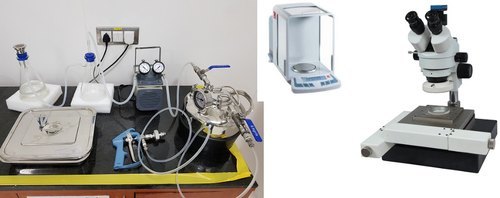
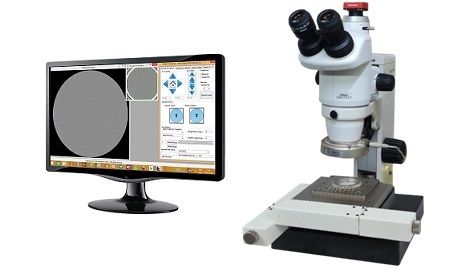
Cleanliness Test
1000.0 INR/Unit
Product Details:
- Accuracy 1% %
- Measuring Range 0.01~100 mg (contaminants) Delisle
- Features High sensitivity, Stable results, User-friendly operation
- Product Type Cleanliness Test
- Mounting Type Tabletop
- Humidity 40% ~ 70% RH
- Operating Voltage 220 V Volt (V)
- Click to view more
X
Cleanliness Test Price And Quantity
- 1 Unit
- 1000.0 INR/Unit
Cleanliness Test Product Specifications
- 0.4-0.6 MPa (dry, clean air) mpa
- 220 Volt (v)
- Microcomputer Automatic Control
- 0~60L/min
- Single Specimen
- Laboratory
- Laboratory, Industrial, Material Testing
- White
- 600 mm
- 600 mm
- 15 C ~ 35 C Celsius (oC)
- 45 kg Kilograms (kg)
- 1% %
- 10-200 mm/min (Adjustable)
- 250 mm Millimeter (mm)
- Cleanliness Test
- High sensitivity, Stable results, User-friendly operation
- 0.01~100 mg (contaminants) Delisle
- 6 mm
- Electric
- Digital Display
- 40% ~ 70% RH
- Tabletop
- 220 V Volt (V)
- 0.01 mg
- 50 Hz Hertz (HZ)
- 47 mm standard Millimeter (mm)
- RS232/USB output
- User-defined Pcs/hr
- Automatic
- 2 s Seconds
- Cleanliness Test Equipment
- 60 dB
- ISO 16232, VDA 19
- Multi-Language (English/Chinese)
- Stainless Steel
- Data Analysis & Storage
- LED Illumination
- Standard Export Wooden Case
- Touch Screen + Keypad
Cleanliness Test Trade Information
- Pune
- 10 Unit Per Day
- 24 Hours
- No
- All India
Product Description
Component Cleanliness Test commonly known as Cleanliness test commonly known as Millipore test is done on functionally critical parts from engine, transmission, braking assemblies etc or the fluids such hydraulic, fuel etc. It involves contamination extraction from the component/fluid, filtration of contamination, contamination weight analysis (gravimetry) and complete particle analysis as per ISO 16232-18, VDA19.1 or as per any OEM standard.
Precision and Reliability for Contamination Testing
Engineered for demanding laboratory and industrial assessments, this cleanliness test equipment provides unmatched precision with a measuring range of 0.01-100 mg and a highly sensitive detection system. Automatic microcomputer control ensures consistency, while compliance with ISO 16232 and VDA 19 guarantees industry-standard results. Its robust stainless steel chamber enhances durability and ensures a clean testing environment.
User-Friendly Interface and Multi-Language Support
Featuring both a touch screen and keypad, this tester offers intuitive, straightforward operation. Multilingual support (English/Chinese) makes it accessible for diverse teams, and the digital display provides clear test data. Convenient software tools enable thorough data analysis and secure storage for easy retrieval and reporting.
Flexible Application and Efficient Operation
Adjustable test speeds (10-200 mm/min), customizable capacity, and a test stroke up to 600 mm suit a range of specimen sizes and testing needs. LED illumination and a low-noise design promote a comfortable lab experience, while standard export packaging ensures safe delivery. This tabletop device is ideal for laboratory, industrial, and material analysis environments.
FAQ's of Cleanliness Test:
Q: How does the cleanliness test equipment ensure accurate contaminant measurement?
A: The equipment utilizes a high-sensitivity microbalance with a precision of 1% and a resolution of 0.01 mg. Its robust stainless steel test chamber and automated microcomputer control maintain controlled conditions, mitigating human error and ensuring consistent, reliable results.Q: What standards does this cleanliness test equipment comply with?
A: This device is compliant with ISO 16232 and VDA 19, which are internationally recognized standards for evaluating particulate contamination on components, ensuring the results are industry-accepted and traceable.Q: When should I use this equipment for major laboratory or industrial tests?
A: This test equipment is ideal whenever there is a need to quantify particulate contamination on parts or materials, especially for quality control, product validation, or research within laboratory and industrial settings.Q: Where can the cleanliness test equipment be installed and used?
A: Its compact, tabletop design makes it suitable for laboratory benches, industrial testing stations, or research facilities, provided a power supply (220V, 50Hz) and dry, clean air (0.4-0.6 MPa) are available within the controlled temperature and humidity range (15-35C, 40-70% RH).Q: What is the process for conducting a cleanliness test with this equipment?
A: Place a single specimen (47 mm standard size) in the chamber, set parameters through the touch screen or keypad, and start the test. The automatic system manages the test speed, stroke, and collection, and the results are displayed digitally. Data is simultaneously analyzed and stored by the integrated software.Q: How does the user benefit from the multi-language support and digital interface?
A: Multi-language support (English/Chinese) eliminates language barriers for operators, and the digital touch screen interface streamlines operation, minimizes training time, and improves overall user experience. The integrated data management software enables efficient result analysis and easy data export via RS232/USB.Tell us about your requirement

Price:
Quantity
Select Unit
- 50
- 100
- 200
- 250
- 500
- 1000+
Additional detail
Mobile number
Email

Other Products in 'Cleanliness Analysis System' category



Our Products
Quick Links

- Flat NO. 3, DINKAR SMRITI OFF. J. M. ROAD, CTS 1295 SHIVAJI NAGAR,Pune - 411005, Maharashtra, India
- Phone : 08045812644
GST : 27AAJCC6007F1ZU

- Mr Prashant P (Head-Applications)
- Mobile : 08045812644
-
 Send Inquiry
 Send Inquiry
 Send Inquiry
 Send SMS

CONATION TECHNOLOGIES PRIVATE LIMITED
All Rights Reserved.(Terms of Use)
Developed and Managed by Infocom Network Private Limited.
Developed and Managed by Infocom Network Private Limited.


